Currently Empty: $0.00

Dr. Arti Verma
- May 24, 2026
- Comment 0
How to Choose a Tutor in Perth:
Qualified Teacher or Uni Student?
Knowing how to choose a tutor in Perth comes down to one idea: the title on the advertisement tells you almost nothing about whether the person can actually help your child. Across Perth, from the southern suburbs of Canning Vale and Harrisdale through to the northern beaches, families are paying for tutoring in record numbers, yet most decisions are made on price and gut feel rather than on the things that move results.
The choice is usually framed as a simple one. Do you hire an experienced qualified teacher who charges more, or a bright university student who charges less and sat the same exams only a few years ago? Both can be the right answer. Both can also be an expensive mistake.
Research from the University of Wollongong in 2025 estimates that around one in six Australian students receives private tutoring at some point in their schooling, rising to roughly one in four in some areas. That is a lot of families making the same decision.
This guide breaks the choice down properly. It covers what you are paying for with a qualified teacher, where a university student genuinely adds value, how a private tutor compares to a structured tutoring centre, and the exact questions to ask before you hand over a single dollar. By the end, you will know how to match the tutor to your child rather than to a price tag.
Table of Contents
- How to Choose a Tutor in Perth Without Getting It Wrong
- The Real Reason Most Perth Parents Get This Choice Wrong
- Qualified Tutors in Perth: What You Are Really Paying For
- University Students as Tutors: Where They Shine and Where They Fall Short
- Qualified Teacher or Uni Student: A Side by Side Comparison
- Private Tutor Versus Tutoring Centre: Which Setup Suits Your Child?
- The Questions to Ask Before You Hire Any Tutor in Perth
- Matching the Tutor to the Goal: GATE, NAPLAN, OLNA and ATAR
- Conclusion
- Helpful Links for Parents
- Resources Used
The Real Reason Most Perth Parents Get This Choice Wrong
Most parents get the choice wrong because they treat tutoring as a regulated profession when it is not. In Australia, anyone can call themselves a tutor. There is no licence, no required qualification, and no central register, so the word tutor on its own carries no guarantee of skill, safety or curriculum knowledge.
This is the part many families never hear. Schools sit inside a strict accreditation system, but the tutoring industry does not. Researchers at the University of Sydney noted in 2025 that as many as 80,000 private tutors were working in Australia, many of them without any formal teaching credentials. The same body of research repeatedly describes tutoring in Australia as essentially unregulated, with each operator free to set its own rules.
The practical effect is that the burden of quality control falls entirely on you. A polished website and a confident first lesson are not evidence of teaching ability. A high personal ATAR proves that someone learned well, not that they can teach a struggling Year 8 student why they keep losing marks on the same type of question.
So the mistake is rarely choosing a teacher over a student, or the reverse. The mistake is choosing on the wrong criteria altogether: lowest price, nearest suburb, or the highest score the tutor personally achieved. The decision that actually matters is whether the tutor can diagnose your child’s specific gap and teach to the Western Australian curriculum and its assessments. That is the lens the rest of this guide uses.
If you are not yet sure whether your child needs a tutor at all, our guide on signs your child needs a tutor is a useful first step.
Qualified Tutors in Perth: What You Are Really Paying For
When you hire a qualified teacher as a tutor in Perth, you are paying for training, accountability and assessment expertise, not simply subject knowledge. A registered teacher has been through a formal pathway designed to produce someone who can teach, not just someone who knows the content.
The standard in this state is clear. Every teacher working in a Western Australian school must be registered with the Teacher Registration Board of Western Australia, a legal requirement under the Teacher Registration Act 2012. To register, a teacher must hold an accredited initial teacher education qualification, typically a minimum of four years of higher education that includes supervised classroom practice, and their qualifications are checked against national professional standards.
Safety sits alongside that. Registered teachers hold a current Working With Children Check through the WA Department of Communities and complete a national criminal history check that is renewed every five years. None of this is automatically true of an unregistered tutor advertising online.
What does this buy your child in practice? Three things stand out. First, curriculum fluency: a qualified teacher knows how the Western Australian syllabus is structured and how marks are awarded in WACE, NAPLAN and other assessments. Second, diagnostic skill: years in a classroom train a teacher to spot why a child is stuck, not just to confirm that they are. Third, behaviour and pacing: a trained teacher can hold a reluctant learner on task and adjust the lesson in real time.
The trade off is cost and, sometimes, relatability. Across Australia, tutoring rates in 2025 commonly ran from around 55 to 130 dollars an hour, with qualified and specialist tutors clustering toward the upper end. For a child who is well behind, or facing a high stakes year, that premium often pays for itself. For lighter support, it may be more than you need.
Ready to get started?
Experience a full week of
tutoring at no cost.

University Students as Tutors: Where They Shine and Where They Fall Short
University students can be excellent tutors in the right situation, particularly for motivation, confidence and recent exam experience. A strong undergraduate who scored highly only a few years ago remembers exactly what the exam felt like, which questions trip students up, and how they personally cracked them.
There are real advantages here. University student tutors usually charge less, often near the lower end of the typical Australian range of 30 to 130 dollars an hour, which makes regular weekly sessions affordable. Many are closer in age to your child, which can lower anxiety and make a teenager more willing to admit what they do not understand. For subject revision, exam technique and rebuilding a discouraged student’s confidence, that combination can be genuinely powerful.
The limits matter just as much. A high achieving student is not trained to teach, so when a child does not understand an explanation, a student tutor may only know how to repeat it louder or slower rather than approach it a different way. They are less likely to hold a deep map of the Western Australian curriculum, and they rarely have formal experience with how assessments such as NAPLAN or the GATE entrance test are actually marked.
Accountability is the other gap. A university student tutoring on the side may not hold a Working With Children Check unless a parent or a centre insists on it, and there is no professional body overseeing their conduct. That does not make them unsafe. It means the checks are yours to run.
The honest summary is that a university student is often the right choice for an able child who needs a confidence lift, a study partner or focused exam practice, and the wrong choice for a child with a stubborn underlying gap that needs proper diagnosis.
Qualified Teacher or Uni Student: A Side by Side Comparison
The fairest way to compare a qualified teacher and a university student is factor by factor, because each wins on different ground. Neither is universally better. The right pick depends on what your child actually needs this year.
| Factor | Qualified Registered Teacher | University Student Tutor |
|---|---|---|
| Curriculum and assessment knowledge | Strong; fluent in the WA syllabus and marking | Variable; often strong in their own subject only |
| Diagnostic skill | Trained to find the root cause of a problem | Usually able to confirm a problem, less able to unpick it |
| Safety and accountability | TRBWA registration and Working With Children Check | Not guaranteed; must be checked by the parent or centre |
| Relatability and recent exam memory | Good, though further from the student experience | Often excellent; sat the same exams recently |
| Typical hourly cost | Higher, often $80 to $130+ | Lower, often $30 to $70 |
| Best suited to | Persistent gaps, high stakes years, foundational rebuilds | Confidence, revision, exam technique, subject extension |
Read the table by your goal, not by the price. If your child is comfortably capable and simply wants sharper exam technique before a test, a motivated university student may be ideal value. If your child has fallen behind in the basics, keeps repeating the same errors, or is preparing for a selective or high stakes assessment, the diagnostic and curriculum strengths of a qualified teacher usually justify the higher fee.
Here is the insight that reframes the whole debate. Teacher versus student is the wrong question to start with. The decisive factors — curriculum fluency, diagnostic ability and proper safety checks — are not guaranteed by either label on its own. A registered teacher is simply far more likely to come with all three already in place, while with a private student tutor you have to verify each one yourself. The smartest parents choose for those three qualities first and let the job title follow.

Private Tutor Versus Tutoring Centre: Which Setup Suits Your Child?
The private tutor versus tutoring centre decision is really a choice between flexibility and structure. A private tutor offers a single relationship and convenience, while a tutoring centre offers oversight, vetting and a system that does not collapse if one person is unavailable.
A private tutor, whether teacher or student, gives you one consistent face and often home visits. That continuity suits some children beautifully. The risk is concentration: if that one tutor is unwell, moves on, or simply is not the right match, your child’s support disappears overnight. You are also the only quality check, which, given how lightly the industry is regulated, is a heavy responsibility to carry alone.
A reputable tutoring centre in Perth changes that equation. A good centre screens its tutors, confirms Working With Children Checks, sets a consistent teaching approach, and keeps records of a child’s progress so lessons build rather than wander. If one tutor is away, another steps in without the relationship starting from zero. For many families, that structure is the single biggest difference between tutoring that drifts and tutoring that delivers. Read more on why consistency matters in tutoring.
Setting also shapes outcomes. One on one work, whether private or in a centre, allows full personalisation. Small group teaching at a centre adds gentle peer motivation and lower cost, which suits children who lift when they are not isolated. Children preparing for the GATE entrance test or working to lift a NAPLAN result often benefit from the routine and accountability a centre builds in.
We also offer a useful overview of online versus in person tutoring explained if you are weighing up which format might suit your child best.

The Questions to Ask Before You Hire Any Tutor in Perth
Before you hire any tutor in Perth, ask the questions that separate marketing from substance. Because the industry is unregulated, these questions are your quality control, and any reputable tutor or centre will answer them happily.
Safety and Credentials
Ask whether the tutor holds a current Working With Children Check, and if they claim to be a qualified teacher, ask for their Teacher Registration Board of Western Australia number, which you can verify directly. A confident professional will never be offended by this.
Teaching Ability
Probe teaching ability rather than personal achievement. Useful questions include how the tutor works out where a child is struggling, what they do when a child does not understand the first explanation, and how they will measure progress over a term. Notice whether the answers describe a method or merely describe being clever.
Curriculum Fit
Ask how familiar the tutor is with the Western Australian curriculum and the specific assessment your child faces, whether that is OLNA, NAPLAN, the GATE entrance test or the WACE pathway. A tutor who can speak fluently about how marks are awarded is worth far more than one who simply knows the subject.
Consistency and Reporting
Find out who teaches if your regular tutor is unavailable, and how the tutor or centre will keep you informed. The answers to these last questions are usually where a structured centre pulls clearly ahead of an individual working alone.
Ready to get started?
Experience a full week of
tutoring at no cost.
Matching the Tutor to the Goal: GATE, NAPLAN, OLNA and ATAR
The right tutor depends heavily on the goal, because Western Australian assessments each reward different things. Matching the tutor to the specific target is far more effective than hiring a generally clever person and hoping it works out.
GATE Academic Selective Entrance Test
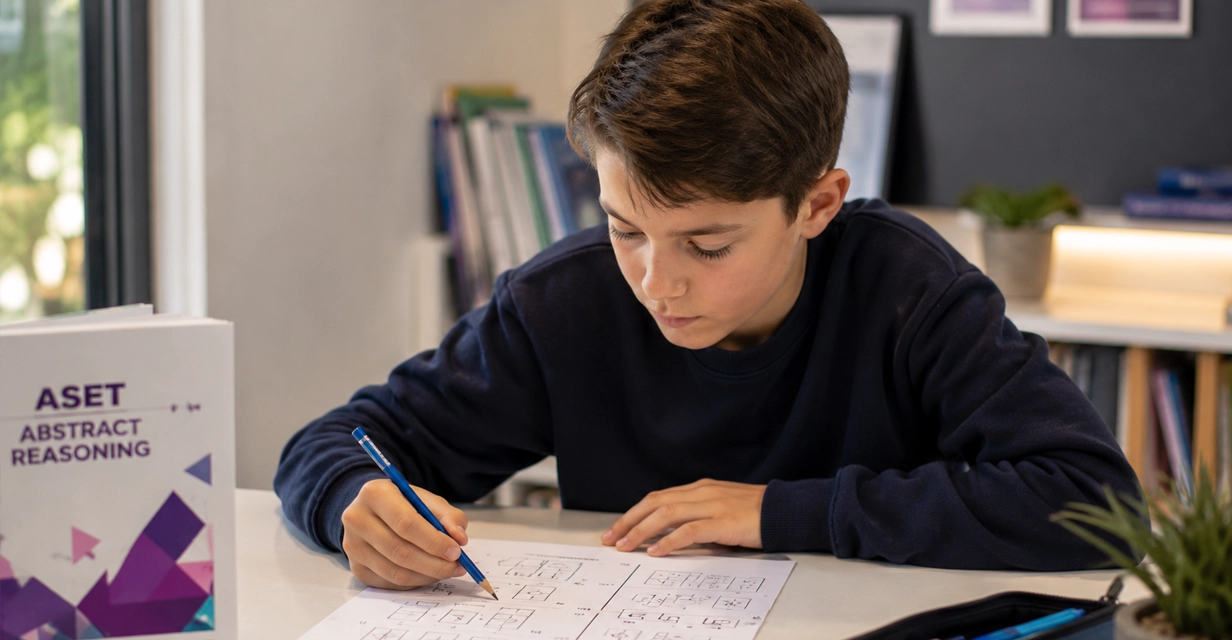
For the GATE academic selective entrance test in Year 6, a tutor needs to understand a test of reasoning rather than school content, covering abstract and quantitative reasoning, comprehension and written expression. Familiarity with the format and timing matters more here than raw subject knowledge, which favours a tutor or centre that has worked with the test specifically. See our guide on how to prepare your child for the GATE test for a full walkthrough.
NAPLAN and OLNA
For NAPLAN in Years 3, 5, 7 and 9, and for OLNA in the senior years, the priority is shoring up core literacy and numeracy and removing simple, repeated errors. A qualified teacher’s diagnostic skill tends to shine here, because the gains come from finding the precise weak spot rather than from general practice. Our parents guide to NAPLAN in Western Australia covers what to expect at each year level.
WACE and ATAR
For the WACE and ATAR years, the stakes and the marking complexity both rise. Understanding how SCSA marks senior subjects, how scaling works, and how to structure exam responses becomes decisive. This is often where the curriculum fluency of a registered teacher delivers the clearest return, although a recent high achieving graduate in a specific subject can be a strong complement for exam technique.
The common thread is simple. Decide the goal first, then choose the tutor whose strengths match it. A child building confidence in maths and a child chasing a top ATAR in chemistry do not need the same person, and the families who get tutoring right are the ones who start from the goal rather than the price.
Conclusion
Choosing between a qualified teacher and a university student is the wrong place to start. The better question is whether the tutor can diagnose your child’s real gap, teach to the Western Australian curriculum, and prove they are safe to work with children. A registered teacher usually arrives with all three in place, while a private student tutor can be excellent value once you have checked each one yourself.
Remember that the industry is unregulated, so the word tutor guarantees nothing on its own. Ask for credentials, ask how the tutor finds and fixes problems, and match the choice to the specific goal, whether that is GATE, NAPLAN, OLNA or a strong ATAR. For many Perth families, a structured tutoring centre answers most of these concerns at once, because the vetting, consistency and progress tracking are built in.
Get the criteria right and the teacher versus student question mostly answers itself. Choose for diagnosis, curriculum fluency and safety first, keep the weekly commute realistic, and your child gets support that actually moves the needle rather than support that simply fills an hour.
Book a free consultation with Champion Tutors today and let us help you make the right choice for your child.
Helpful Links for Parents
Verify a teacher’s registration or learn the standards teachers must meet — Teacher Registration Board of Western Australia
https://www.trb.wa.gov.au
Check or apply for a Working With Children Check — WA Department of Communities
https://workingwithchildren.wa.gov.au
Understand what your child is assessed on — School Curriculum and Standards Authority (SCSA)
https://www.scsa.wa.edu.au
Resources Used
University of Wollongong, research on the scale and regulation of private tutoring in Australia, 2025
University of Sydney, study on tutoring quality, safety and the lack of regulation, published in the Australian Educational Researcher, 2025
Teacher Registration Board of Western Australia, registration requirements under the Teacher Registration Act 2012
https://www.trb.wa.gov.au
WA Department of Communities, Working With Children Check requirements, 2026
https://workingwithchildren.wa.gov.au
Australian private tutoring rate and market data, 2025