Currently Empty: $0.00
Dr. Arti Verma
- June 10, 2026
- Comment 0
How Small Group Tutoring Works,
and Why It Beats a Crowded Classroom
Table of Contents
- Introduction
- How Does Small Group Tutoring Work?
- Why a Crowded Classroom Holds Children Back
- The Benefits of Small Group Tutoring
- Small Group vs One on One Tutoring: The Honest Comparison
- What Is the Best Tutoring Class Size?
- Is Small Group Tutoring Personalised Enough?
- Choosing Small Group Tutoring in Perth
- Conclusion
- Helpful Links for Parents
- Resources Used
Introduction
Most parents in Perth have watched it happen. Their bright, curious child sits in a class of 30, slowly fades into the background, and stops asking questions because there is never quite the time or the space. The teacher is skilled and hard working, but one adult simply cannot reach 30 children at once. Something has to give, and too often it is your child’s understanding.
This is exactly why small group tutoring in Perth has become so popular. It takes the part of school that works, a teacher guiding learners, and removes the part that does not, the crush of a crowded room. The result is a setting where a child is seen, heard and helped every single session.
What surprises many parents is how strong the evidence behind this is. Small groups do not just feel better, they measurably work better than large classes, and they come remarkably close to the impact of one on one tutoring while adding things a solo session cannot.
This guide explains how small group tutoring actually works, why a crowded classroom holds children back, the genuine benefits of learning in a small group, and how it compares to one on one tutoring. By the end, you will understand the research, the ideal class size, and how to choose the right small group setting for your child.
How Does Small Group Tutoring Work?
Small group tutoring works by pairing one tutor with a handful of students, usually between two and five, so the teaching can focus closely on each child while still allowing them to learn alongside peers. It sits in the sweet spot between a private session and a full classroom.
In practice, the tutor works with a small enough group to know each child well. They can see when one student is confused and another is ready to move on, and adjust in real time, rather than delivering a single lesson aimed at the middle of a large room. Every child is within reach of individual attention.
The structure usually blends shared teaching with individual practice. The tutor might explain a concept to the group, then move between students as they work, checking understanding, correcting mistakes and offering feedback. This rhythm gives each child both guided instruction and personal support within the same session.
Group tuition in Perth typically groups children of similar age or ability, so the pace suits everyone in the room. That matching matters, because a well formed small group lets the tutor pitch the work at the right level for all of its members rather than leaving some bored and others lost.
The defining feature is the ratio of attention to each child. With only a few students, a tutor can give the kind of frequent, personal feedback that simply is not possible in a crowd, and that feedback is exactly what makes the difference, as the next section explains. If you are weighing this option against working one on one, group classes or private tutoring for GATE covers that comparison in more depth.
Why a Crowded Classroom Holds Children Back
A crowded classroom holds children back not because of the number of bodies in the room, but because individual feedback collapses as numbers rise. When one teacher faces 30 students, there is little time to notice, reach or respond to any single child.
The research on class size is revealing here. According to the Education Endowment Foundation, reducing class size produces only modest gains, around one to two months of additional progress, and only when the reduction is large enough that the teacher can actually teach differently. Trimming a class from 30 to 25 changes very little, because the teacher still has to broadcast to the group.
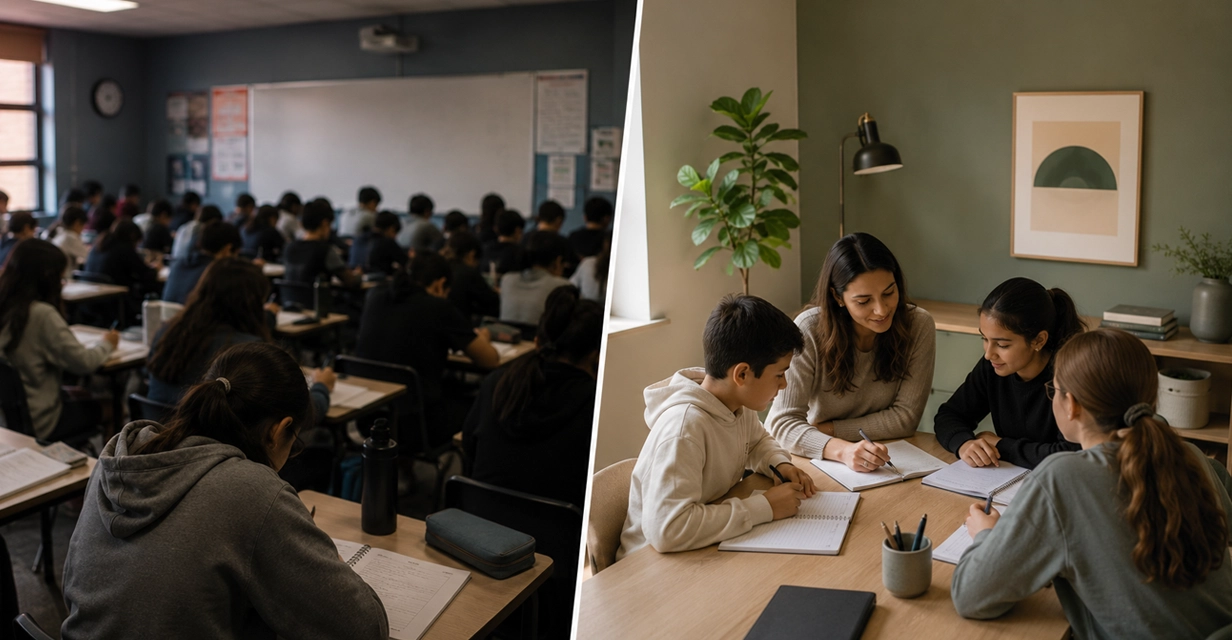
Even substantial reductions deliver surprisingly little. The famous Tennessee STAR study found that cutting classes from around 22 students to 15 raised achievement by only a few months over four years. At both sizes, the teacher is still addressing a group rather than responding to each child, so the fundamental problem remains.
This is the heart of why crowded classrooms struggle. The Education Endowment Foundation notes that the gains from smaller classes come from the quality and quantity of feedback pupils receive, and from the flexibility to organise learning differently. In a large class, feedback per child is spread so thin that quieter or struggling students slip through unseen.
The lesson is clear and important. The issue is not simply too many children, but the point at which a teacher can no longer give each child real, responsive feedback. A crowded classroom passes that point badly, which is precisely the gap a small group is designed to close.
Ready to get started?
Experience a full week of
small group tutoring at no cost.

The Benefits of Small Group Tutoring
The benefits of small group tutoring come from combining strong individual feedback with the motivation and interaction of learning alongside peers. It captures much of the power of personal teaching while adding advantages a solo session cannot offer.
The evidence is genuinely strong. The Education Endowment Foundation finds that small group tuition produces around four months of additional progress on average, placing it among the best evidenced ways to support a child’s learning. That is several times the impact of ordinary class size reductions, because the feedback ratio is transformed rather than merely nudged.
Feedback is the first major benefit. In a group of just a few, a tutor can watch each child work, catch misunderstandings as they happen, and respond personally, which is exactly the high quality, frequent feedback that drives learning. Nothing slips by unnoticed for long.
Peer learning is the second. Children in a small group hear how others approach a problem, learn from one another’s questions, and often grasp a concept better when a peer explains it. The Education Endowment Foundation even notes that for some skills, such as reading, small group teaching can sometimes outperform one on one work, partly because of this interaction.
Motivation and confidence complete the picture. Working alongside a few like minded children can lift a student’s effort and ease the self consciousness some feel about asking questions, while still keeping the group small enough that no one hides. Add a lower cost than private tutoring, and the small group offers a rare combination of effectiveness, engagement and value.
Small Group vs One on One Tutoring: The Honest Comparison
In the small group vs one on one tutoring comparison, both are highly effective, and the gap between them is smaller than most parents expect. One on one offers maximum personalisation, while a small group adds peers and value, and the right choice depends on the child.
The numbers tell an encouraging story. The Education Endowment Foundation reports that one on one tuition produces around five months of additional progress and small group tuition around four, so both sit among the strongest interventions available. The difference is real but modest, not the gulf the price gap might suggest.
The comparison is even closer than that average implies. The Education Endowment Foundation notes that studies show mixed results, with one on one leading to greater gains in some cases, while in others tuition in groups of two or three has been equally or even more effective. The expensive option is not automatically the better one.
Each format has a distinct strength. One on one tutoring is unmatched for a child with a specific, stubborn weakness that needs intensive, undivided focus, while a small group adds peer motivation, the chance to learn from others, and a more affordable price. Neither is universally superior.
So the honest comparison is reassuring. Because both work well and the difference is small, you are choosing between two good options rather than a right and a wrong one. For many children, a small group offers nearly the impact of one on one with added benefits, while one on one wins where a particular gap demands total focus.
What Is the Best Tutoring Class Size?
The best tutoring class size is small, generally between two and five students, because effectiveness rises as the group shrinks but the value of peers means a tiny group is not always necessary. The research points clearly to this range.
The guiding principle from the Education Endowment Foundation is simple: as a rule of thumb, the smaller the group the better. A group of three allows more individual feedback than a group of five, which is why genuinely small numbers matter so much to the quality of the teaching.
There is also a clear ceiling. The evidence shows that once a group grows beyond about six or seven students, effectiveness drops off noticeably, because the tutor can no longer give each child personal attention and begins to broadcast like a classroom teacher. Beyond that threshold, the magic of the small group is lost.
This is why checking the actual numbers matters when comparing options. A class advertised as a small group but holding ten or twelve students is really a small classroom, and it will behave like one. A true small group of a handful of children is a fundamentally different experience.
The practical sweet spot for most families sits at around three to five students. This is small enough for each child to receive frequent, personal feedback, yet large enough for the peer interaction and motivation that make a group valuable. When weighing any option, ask exactly how many children are in the group, because that single number shapes everything about how it works.
Is Small Group Tutoring Personalised Enough?
Small group tutoring is personalised enough for most children, because a tutor working with only a few students can still tailor explanations, feedback and pace to each one. The personalisation is real, even if it is not quite as total as a private session.
The key is the ratio. With just a handful of students, a tutor can know each child’s strengths and weaknesses, watch them work, and respond individually as they go. This is genuine personalised tutoring in Perth, delivered within a small group rather than one to one, and it covers the needs of the great majority of learners well.
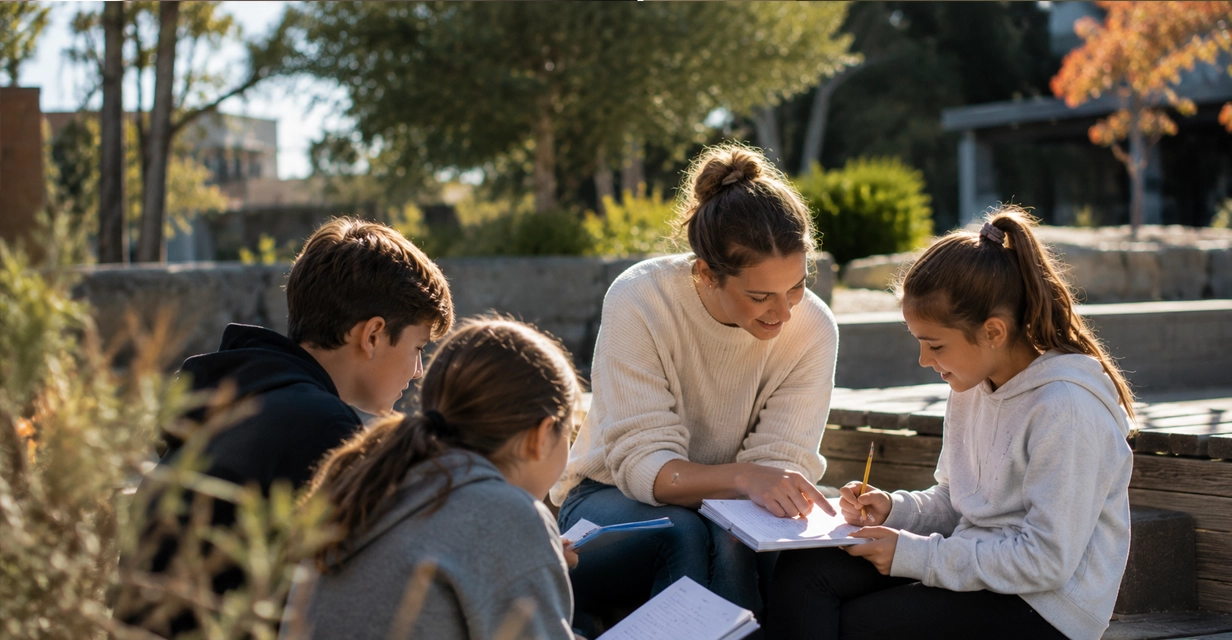
Good small groups are also matched by level. Grouping children of similar ability means the shared teaching already suits everyone in the room, so the tutor’s individual attention can focus on fine tuning rather than bridging huge gaps. Thoughtful grouping is part of what makes the personalisation work.
There is an honest limit worth naming. A child with an unusually specific or severe gap, who needs the tutor’s complete focus for an extended period, may be better served by one on one work, at least for a time. A small group shares attention, so a student needing all of it may not find enough there.
For most children, though, a small group offers more than enough personal support, plus the peer benefits a solo session lacks. The fairest way to see it is that small group tutoring is highly personalised for typical needs, while one on one remains the choice for the rare cases that demand total, sustained focus.
Choosing Small Group Tutoring in Perth
When choosing small group tutoring in Perth, look past the label to the actual group size, the quality of the tutors, and how convenient the sessions will be to attend consistently. These practical details decide whether a small group delivers on its promise.
Start by confirming the numbers. Because effectiveness falls once a group exceeds about six or seven, ask exactly how many children are in each session. A genuine small group of a few students offers the benefits described here, while a larger class quietly becomes the crowded room you were trying to leave behind.
Check the quality of teaching next. Whatever the group size, the tutor matters most, so look for experienced tutors who give real feedback, understand the curriculum and any relevant assessments, and hold a current Working With Children Check. A small group led by a weak tutor still underperforms, which is why how to choose a tutor in Perth is worth reading alongside this guide. It is also worth understanding why top marks do not mean good teaching, since strong results elsewhere do not always translate into strong tutoring.
Consider grouping and fit too. Ask whether children are matched by age or ability, since a well formed group keeps the pace right for everyone, and check that the level suits your child rather than leaving them stretched or held back.
Finally, weigh location and consistency together. For families across the southern suburbs, including Canning Vale, Harrisdale, Piara Waters, Hammond Park and Kwinana, a nearby option makes regular attendance realistic over a full term, and consistency is one of the biggest drivers of results. Our piece on why consistency matters in tutoring explains why, and if travel is a barrier, online or in person tutoring explained can help you weigh that option too. A quality small group close to home, attended steadily, is a powerful combination.
Ready to get started?
Experience a full week of
small group tutoring at no cost.
Conclusion
Small group tutoring earns its reputation because it solves the core problem of a crowded classroom: the collapse of individual feedback when one teacher faces too many children. By keeping the group to a handful of students, it restores the frequent, personal feedback that drives learning, which is why it delivers gains several times larger than ordinary class size reductions.
The evidence is genuinely reassuring. Small group tuition sits among the most effective ways to support a child, close behind one on one tutoring and sometimes matching it, while adding peer motivation, the chance to learn from others, and a more accessible cost. The decisive factor is not headcount alone but feedback per child, and a true small group gets that ratio right.
When choosing, confirm the group really is small, prioritise skilled tutors, and pick an option you can attend consistently. Get those right, and small group tutoring offers your child the best of both worlds: the personal attention a crowded classroom cannot provide, alongside the motivation and richness of learning together.
Get in touch today for a free consultation to find a small group that genuinely suits your child.
Helpful Links for Parents
Small group tuition evidence, Education Endowment Foundation Teaching and Learning Toolkit
https://educationendowmentfoundation.org.uk/education-evidence/teaching-learning-toolkit/small-group-tuition
Reducing class size evidence, Education Endowment Foundation Teaching and Learning Toolkit
https://educationendowmentfoundation.org.uk/education-evidence/teaching-learning-toolkit/reducing-class-size
Australian Teaching and Learning Toolkit, Evidence for Learning
https://evidenceforlearning.org.au/education-evidence/teaching-learning-toolkit
Resources Used
Education Endowment Foundation, Teaching and Learning Toolkit, evidence on small group tuition and one to one tuition, including average months of progress and the effect of group size.
Education Endowment Foundation, Teaching and Learning Toolkit, evidence on reducing class size and the role of feedback.
Tennessee Student Teacher Achievement Ratio (STAR) study, as summarised by the Brookings Institution, on the effects of reduced class size.